Guide · Water quality
Hard water in Greeley, CO: what it is, and how to find your number
Hard water in Greeley, CO comes down to a measured number. Hardness is the dissolved calcium and magnesium in water, and it leaves scale in water heaters and a whitish buildup on fixtures. This guide explains hardness, what the City of Greeley's reports do and do not say about it, and how to get a measured number for your own tap.
Reviewed October 2026
The short version
- Hardness is mostly dissolved calcium and magnesium. It is sorted into five classes, from soft to very hard.
- The city's 2026 Drinking Water Quality Report does not list a hardness figure.
- To get a number, ask the city's water quality line whether it has one, or have the water tested by an accredited laboratory.
Weighing a softener? Water softener installation
Hard water in Greeley: what hardness is
Hardness is the combined amount of dissolved calcium, magnesium and iron in water, and it is mostly calcium and magnesium.
It is reported in grains per gallon (gpg), parts per million (ppm) or milligrams per liter (mg/L). One grain per gallon equals 17 mg/L. A hardness number is only meaningful with its unit, so ask for the unit too.
The five classes
Water is sorted by its hardness, measured as calcium carbonate, into five classes. The figure sets them in order, with a row for your own number.
The classes are general. They are not a statement about Greeley's water.
- 1
Soft
Below 17 mg/L, which is below 1.0 grain per gallon
- 2
Slightly hard
17 to 60 mg/L, or 1.0 to 3.5 grains per gallon
- 3
Moderately hard
61 to 120 mg/L, or 3.5 to 7.0 grains per gallon
- 4
Hard
121 to 180 mg/L, or 7.0 to 10.5 grains per gallon
- 5
Very hard
Above 180 mg/L, or above 10.5 grains per gallon
- ?
Your tap
Not shown here. It has to be measured.
What the city publishes, and what it does not
The City of Greeley publishes a new Drinking Water Quality Report each June, with the previous year's data. It describes its drinking water as meeting all state and federal standards and as starting out as Rocky Mountain snowmelt.
The 2026 report covers calendar year 2025. It does not list a hardness figure. The other city pages checked for this guide, on water quality, treatment, the water system and lead protection, did not give one either.
What that means. A resident cannot look hardness up in that report. It does not say whether Greeley's water is soft or hard, and neither does this guide. The way to learn it is to get a number measured, as below.
How to get your number
Three steps, in order. Stop at the first one that gives you a number with its unit.
Check the city's latest report
The Drinking Water Quality Report comes out each June. The 2026 edition does not list hardness. Look again when a newer one appears.
Ask the city's water quality line
City of Greeley Water and Sewer, through its water quality line (the city's water quality page lists how to reach it), a city department. Ask whether it has a hardness figure it can share. This guide cannot say that it will.
Have the water tested
An accredited water-testing laboratory can measure hardness. Ask for the result in mg/L or grains per gallon, so it matches the classes above.
A measured number from your own tap is the one to use. The classes in Fig. 1 then tell you where it falls.
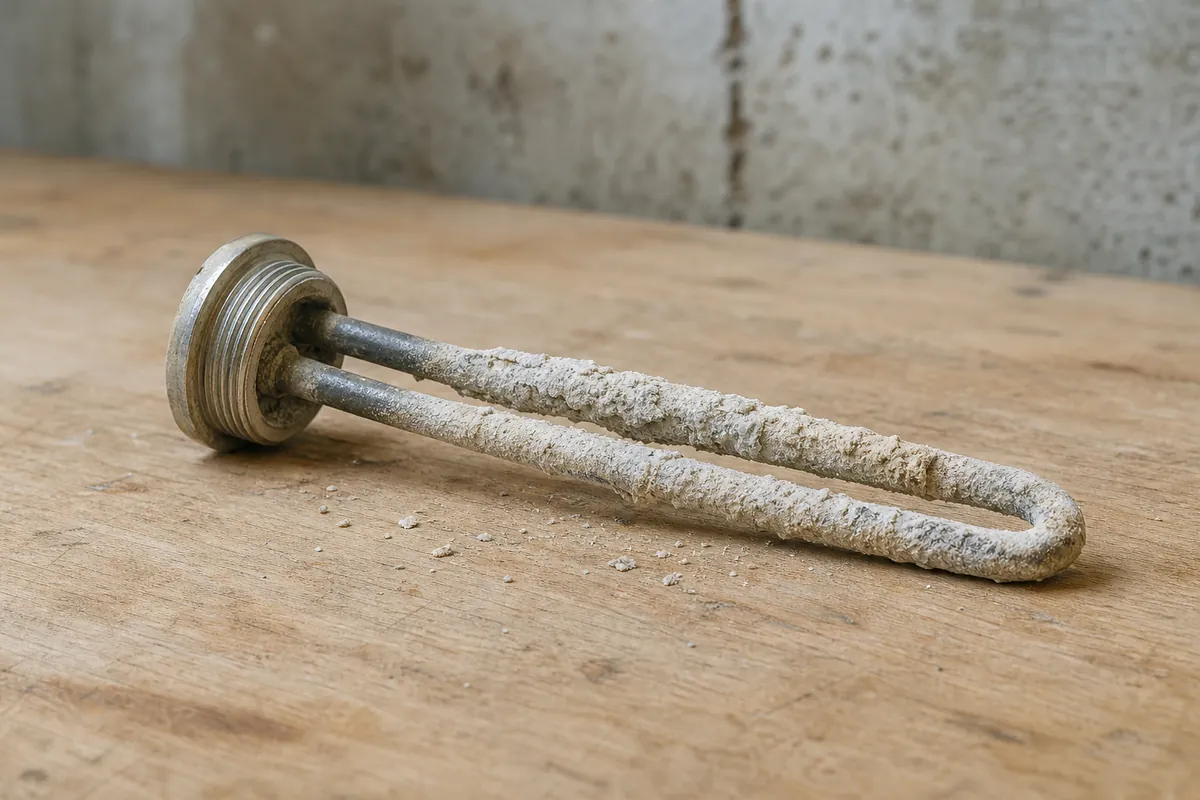
What hardness does
North Dakota State University Extension describes what hardness does.
Water heaters
When water is heated, hardness minerals come out of it and coat the heating elements of an electric heater. The deposit also coats the inside of the tanks of both electric and gas heaters. A large buildup slows heating, takes more energy and shortens a heater's life.
For the heaters themselves, tankless water heaters covers scale and flushing for a tankless unit, and water heater repair and water heater replacement cover what happens when a tank heater is affected.
Fixtures and detergents
Hardness leaves a whitish buildup on faucet and shower-head ends, and detergents clean less well in it.
What it does not mean
NDSU Extension says hard water is considered a nuisance and not a health problem. That is about hardness itself. It says nothing about other things in water, and this guide makes no health claim of its own.
Your options once you have a number
Whether to do anything depends on your measured number and on what bothers you. Each option has a page of its own.
-
A softenerIon exchange
A standard softener exchanges calcium and magnesium for sodium, and is recharged with salt brine. How one is sized, plumbed in and kept up is on water softener installation.
-
FiltrationA different job
Softening and filtration answer different problems. Which one fits depends on what the problem is. Water filtration systems sorts filters by problem.
-
Magnetic devicesWhat the source says
For magnetic conditioning devices, the Water Quality Association could not set standards, and several research reports found no change in the water they treated. This guide says nothing about other kinds of "salt-free" system.
Taste is a different matter. An earthy taste or smell in summer is not a hardness question, and the city has its own tips for it. They are set out with the filter options on water filtration systems.
Ready to talk to a plumber about treatment?
Have your measured number and your questions ready.
Common questions
How hard is Greeley's water?
This guide cannot give a number. The city's 2026 Drinking Water Quality Report does not list a hardness figure. To find yours, ask the city's water quality line whether it has one, or have a laboratory measure it.
What is hard water?
Water with a lot of dissolved calcium and magnesium in it. It is reported in grains per gallon, ppm or mg/L, and sorted into five classes from soft to very hard.
Does hard water damage a water heater?
Hardness minerals can coat heating elements and the inside of tanks, and a large buildup slows heating, takes more energy and shortens a heater's life. How much that matters depends on how hard your water is, which only a measured number tells you.
Is hard water bad for my health?
NDSU Extension says hard water is considered a nuisance and not a health problem. This guide makes no health claim of its own.
How do I test my water's hardness?
Ask your water supplier for its latest test results, or use an accredited water-testing laboratory. Ask for the result in mg/L or grains per gallon.
Do I need a water softener?
Only a measured number tells you how hard your water is, so get that first. Whether it is worth treating is then a question of what bothers you at home. Water softener installation covers the install.
Why does my water taste earthy in summer?
This guide is about hardness, and an earthy taste is a different matter. The city links that taste to summer conditions in its lakes and reservoirs and offers tips for it. Water filtration systems
What should I do once I have my hardness number?
Compare it with the five classes above, then decide whether scale on fixtures and in the water heater is worth acting on. A softener is one option, and descaling or flushing the heater is another; a plumber can size and fit a system. Water softener installation
Related pages
- Water softener installationSizing, plumbing in and upkeep.
- Tankless water heatersWhat changes, and scale and flushing.
- Water heater repairRepair types by part.
- Water heater replacementWhen replacing is the better question.
- Water filtration systemsWhich filter answers which problem.