Main sewer line cleaning · Greeley, CO
Main sewer line cleaning in Greeley, CO: choose the method, and know what cleaning cannot fix
When several drains in a Greeley, CO home slow or back up together, the cause is often the main sewer line, the pipe every branch drains into. Cleaning opens it. This page covers how that line is reached, how it is cleared, and where cleaning stops. Call now to connect with a local plumber for main sewer line cleaning in Greeley.
This page is about your own line. The City of Greeley maintains the public sewer mains, and residents are responsible for their own service line. A problem on the city's main is the city's to handle.
Local plumbers in Greeley • Request an upfront written estimate • No obligation to hire.
- ACleanout
- BBuildup in the line
- CRoots at a joint
- DLow stretch
Start here
Main sewer line cleaning in Greeley: is it the main line?
One clogged fixture and a blocked main line are different jobs. Three signs point to the main line.
- Several fixtures are slow or backing up at the same time
- The lowest drain in the house, such as a basement floor drain, fills or gurgles first
- Running one fixture makes another gurgle or rise
One drain, or the main line? One slow sink or tub is a fixture job, and drain cleaning covers it. This page starts where the branches join. If sewage is already coming up, sewer backup covers the first steps and whose line it is.
Whose line? The City of Greeley says it is not responsible for maintaining private sewer service lines, and its page does not say where on a given lot the city's main ends and your line begins. Who repairs sewer and water lines in Greeley sets out what the city says and who to ask.
Getting in
Cleanout access: how the line is reached
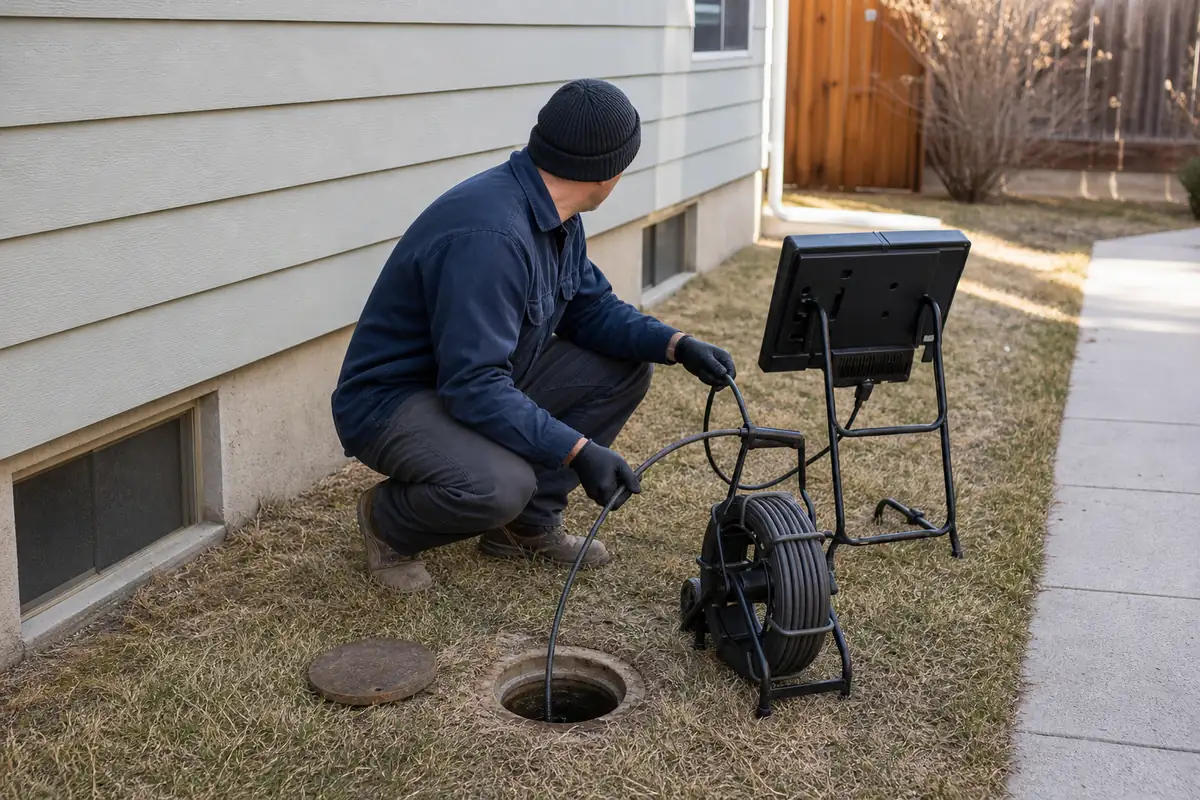
A plumber needs a way into the line before anything can be cleared. For the main line, that way in is the cleanout.
What a plumber needs
- A cleanout that can be reached: a capped opening into the main line. Its position varies by house, from a basement or crawl space to a spot outside along the foundation.
- Clear space around it to work, and a cap that can be taken off.
- To know where it is. If you cannot find yours, say so when you call.
Do not open the cleanout while the line is backed up. The wastewater held behind the cap can come out.
If there is no usable cleanout
- Some houses have no cleanout, or one that cannot be reached.
- A plumber may then have to find another way into the line. The options depend on the house, so describe what you can see.
- A plumber may suggest adding a cleanout, so the line can be reached next time.
The city's wastewater page does not say who owns the cleanout. What the city says and leaves open
Cable or jetting
Cable or hydro jetting on the main line
Both are run into the line through the cleanout. They clear it differently, and neither is better in every case.
What is blocking the line
A soft stoppage, a coating of grease and a mass of roots ask different things of the equipment.
The condition of the pipe
A plumber judges the pipe before choosing a method, sometimes with a camera first. Jetting suits some pipes and not others, and a damaged pipe may not suit either method.
How the line can be reached
Both methods need a way in. Where the cleanout is, and how far the blockage sits from it, shape what can be done.
Pressures, lengths and times depend on the equipment and on the line.
- ACable with a cutting head. Good for opening a path through a blockage and cutting roots back from the opening. Watch for: it clears a path through what is there, and it may leave a coating on the pipe wall.
- BHydro jetting. Good for scouring grease and debris from the pipe wall, not only opening a path. Watch for: whether it suits a pipe depends on the pipe's condition, which a plumber checks first.
What blocks it
Roots, grease, paper and wipes
These are the common causes of a main-line blockage. A blockage tends to come back where its cause is still there.
Tree roots
Roots can grow into a joint in an underground pipe. Cutting them clears the line; it does not close the joint they came through.
Grease
Grease cools and sticks inside the line, and other debris catches on it. The City of Greeley asks residents to keep fats, oils and grease out of drains.
Paper and wipes
Wipes, including ones sold as flushable, are a common cause of blockages in the main line. The city asks residents to keep "flushable" wipes out of toilets and drains and to flush only toilet paper.
The pipe itself
A sagging or offset section catches debris whatever goes down the line. That is a repair question, not a cleaning one. Sewer line repair
When it keeps coming back
Recurring blockages: what the pattern can tell you
Cleaning opens the line for now. If the same blockage returns, something is still in the line that catches debris, or something is still going down it.
-
Back within weeksThe same drains again
A coating may have been only partly removed, or the pipe may have a rough or low section. Ask the plumber whether a camera makes sense.
-
Roots keep returningOften the same spot
Cutting roots clears the line but does not deal with the joint they used. Unless that joint is dealt with, roots can return. That is a repair question. Sewer line repair
-
Grease or wipesHousehold habits
If grease or wipes are still going down, cleaning removes them and the habit refills the line. Following the city's guidance is the fix.
-
How often is often?No fixed schedule
There is no universal schedule for cleaning a main line. It depends on why it blocked, and this page gives no figure. A line that needs cleaning again and again is a reason to find the cause, not to clean it on a timer.
Several drains slow or backing up? Call now to connect with a local plumber for main sewer line cleaning in Greeley.
Call (970) 633-4799After cleaning
Looking inside afterward
A camera run through the cleaned line can show whether it is open and what caused the blockage.
Worth asking about when
- The same line has blocked before
- Roots or heavy buildup were found
- You suspect damage to the pipe
- You are buying the house and the line is hidden
A camera is a separate step from cleaning, and not every cleaning needs one. Sewer camera inspection covers what a camera shows and how to use the result.
Where cleaning stops
What cleaning fixes, and what it does not
Cleaning clears what is inside the pipe. It does not change the pipe.
Cleaning is the job
- A blockage of grease, paper, wipes or soft debris
- Roots inside the pipe, cut back so the line flows
- A line that runs freely again after clearing
Cleaning cannot fix
- A cracked, broken or collapsed pipe
- An offset joint or a sagging section that catches debris again
- A joint that lets roots in
- A line that drains and then blocks again soon after
Clearing opens it; repair fixes the pipe. When a camera shows damage, clearing is a stopgap. Sewer line repair covers how damage is fixed.
Keeping it clear
Keeping the line clear, and what to have ready
A few habits keep the common causes out of the line, and a few facts make the call shorter.
Keep it clear
- Flush only toilet paper, as the City of Greeley asks, and keep "flushable" wipes out.
- Keep fats, oils and grease out of every drain.
- Find your cleanout before there is a problem, and keep the area around it clear.
Have this ready for the call
- Which fixtures are slow or backing up, and which drain fills first
- Whether the line has blocked before, and what was done
- Where the cleanout is, or that you cannot find it
FAQ
Main sewer line cleaning: common questions
How do I know it is the main line?
Several fixtures slow or backing up at once, the lowest drain filling first, or one fixture rising when another runs all point to the main line. If only one fixture is affected, it is more likely a drain cleaning job.
How often should a main line be cleaned?
There is no universal schedule. It depends on why the line blocked, and a line that needs cleaning repeatedly is a reason to find the cause. This page gives no figure.
Cable or hydro jetting?
It depends on what is blocking the line and on the condition of the pipe, which a plumber checks before choosing. Neither is better in every case, so the right choice depends on your line.
Will cleaning fix roots for good?
Not by itself. Cutting roots clears the line, but the joint they grew through is still there. If roots keep returning, the question becomes repair.
Where is my cleanout?
It varies by house: a basement, a crawl space, or a spot outside along the foundation. If you cannot find it, say so when you call. The city's wastewater page does not say who owns the cleanout.
Is a camera needed after cleaning?
Not every time. It is worth asking about when the line has blocked before, when roots or heavy buildup were found, or when you suspect damage. Sewer camera inspection
Does the city clean my line?
The City of Greeley says it is not responsible for maintaining private sewer service lines, and it points residents with a service-line problem to a private sewer maintenance company. It maintains the public sewer mains. Who repairs sewer and water lines in Greeley
What should I do while waiting for a plumber?
Stop running water in the house if a drain is backing up, and do not open the cleanout while the line is backed up, since the wastewater held behind the cap can come out. Note which fixtures are affected and which drain fills first, and mention it on the call.
Call about the main sewer line
Say which fixtures are affected, which drain fills first and whether the line has blocked before.
Reviewed October 2026