Clogged toilet · Greeley, CO
Clogged toilet in Greeley, CO: stop the overflow, then find the cause
A toilet that clogs once is usually a fixture problem. A toilet that clogs again is often reporting a restriction in the drain behind it, and forcing it only moves the problem. First make sure the bowl cannot overflow. If the clog keeps coming back, or other drains are acting up too, the problem is further down the line and a plumber is the next call.
Local plumbers in Greeley • Request an upfront written estimate • No obligation to hire.
Clogged toilet in Greeley: is the water still rising?
Still rising
- Do not flush again
- Push the flapper down in the tank
- Close the valve behind the toilet
Water has stopped
- Stop forcing it
- Try the other fixtures
- Call for an immediate evaluation if it returns
- 1Shutoff valve
- 2Flapper
- 3Drain opening
- 4Trap
If it is overflowing
Stop an overflowing toilet
Flushing again only sends more water into a full bowl. Stopping the tank from refilling is what stops the overflow.
Stop flushing and lift the tank lid
Push the rubber flapper at the bottom of the tank down over its opening. That stops water running into the bowl.
Close the valve behind the toilet
Turn it clockwise until it stops. Now the tank cannot refill.
Let the water settle, and soak up the floor
Do not flush again until the bowl has drained back to its normal level. Put towels down and keep people out of the wet area.
Sewage in the tub or a floor drain too? That points to the main line, not the toilet. Stop using all water and see sewer backup.
Clearing it
Fixture blockage vs. main lateral failure: recognizing structural restrictions
A toilet drains through a short branch into the building drain and then the sewer lateral. Where the blockage sits decides what has to be done about it, and a plumber's first job is to find out which of the three it is.
- 01
A blockage in the fixture
A single toilet that stops up now and then usually has a local cause: too much paper, a hard object lodged in the curved trapway inside the porcelain, or a weak flush from a worn flapper or a low water level. A plumber clears it from the bowl and, when something solid is wedged in the trapway, lifts the toilet to reach it and reseats it on a new wax seal.
- 02
A restriction in the lateral
When the same toilet stops up again within days, or the tub and floor drains slow and gurgle, the restriction is behind the toilet. In older clay (terracotta) sewer pipe, roots follow moisture into the joints and grow into a mat that catches paper. In plastic pipe, a stretch that has settled forms a belly, a low spot that holds water and solids. Neither condition responds to force at the bowl, because the toilet is only the last place the backup is visible.
- 03
Call for an immediate evaluation
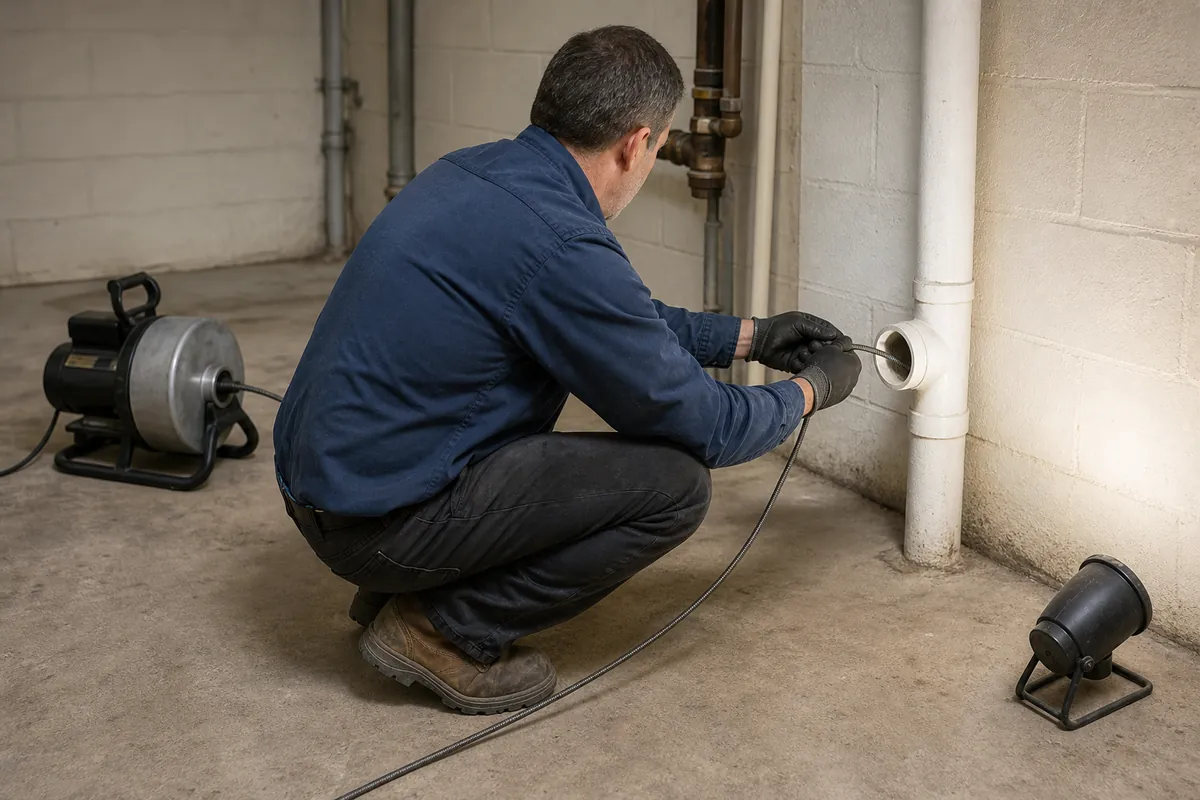
A plumber separates the three cases with a drain machine and, for repeat clogs, a color fiber-optic camera passed through the cleanout to show roots, offset joints, bellies or scale on the pipe wall. A toilet that is clogged again and again is a reason to look at the line before the next overflow. Toilet repair and replacement
Skip chemical drain openers. They can damage fixtures, and if the clog does not clear they leave a hazardous liquid sitting in the bowl.
What repeated plunging does to a restricted line
Every stroke of a plunger pushes the water in the bowl in both directions. When the restriction is in the lateral, the force cannot clear a root mat or a belly full of settled solids. It drives contaminated water back up through the fixture instead, and the splash and aerosol land on the floor, the tank and the person doing the plunging. Wastewater is blackwater: it carries bacteria and viruses, and it should be treated as a contamination event, not a mop-up.
The seal under the toilet takes the same pressure. A wax ring or flange that is already loose can weep at the base during a backup, and the water goes into the subfloor, where it soaks the plywood and the framing under the bathroom. Subfloor that stays wet starts to soften and rot, and mold colonizes damp wood and drywall within days. A slow, hidden leak at the toilet base is often found only when the floor feels soft or the ceiling below stains, and that is a much larger repair than the clog was.
Clogged again, or other drains slow? Call now to connect with a local plumber for clogged toilet help in Greeley.
Call (970) 633-4799Just this toilet?
Is it the toilet, or the line behind it?
One test sorts it out. A clog in the toilet affects only the toilet. A blocked drain line shows up in other places too. Slow drain or main sewer line clog? How to tell
Run a nearby sink or tub, or flush another toilet
Everything else drains normally
The blockage is in this toilet or its own short drain, which a plumber can clear or reach by lifting the toilet. If it keeps coming back, a worn or weak-flushing toilet may be the cause, or the early stage of a restriction further down.
Other fixtures are slow, gurgle or fill up
That points to the main line. Stop using water and see sewer backup or drain cleaning.
What went down
Why toilets clog
Flush only toilet paper, and what comes from you.
That is the City of Greeley's rule too. The city asks residents to keep "flushable" wipes, fats, oils and grease out of toilets and drains.
Common causes
- Too much paper at once
- Wipes, paper towels, cotton products or anything else that does not break down, including products labelled flushable
- A small object, such as a toy, that went down the toilet
- A weak flush from a low water level in the bowl or a worn flapper
- A blockage further down the line, which affects other fixtures as well
FAQ
Clogged toilet: common questions
Is a clogged toilet an emergency?
Usually not, if the water has stopped rising and you have another toilet. It becomes urgent if it overflows, or if several drains back up at once, which points to a problem in the main line. What counts as a plumbing emergency
Should I flush again to see if it cleared?
Not while the bowl is full. Wait until the water has dropped to its normal level, and have a hand on the shutoff valve or the flapper when you test.
Is it safe to keep plunging a toilet that clogs again?
Not as a habit. A toilet that clogs again and again usually has a restriction behind it, and plunging pushes contaminated water back against the seal and onto the floor without moving the real blockage. If the toilet has clogged more than once in a short time, call for an immediate evaluation.
Why does my toilet keep clogging?
Repeat clogs usually have a cause: too much paper, wipes, a weak flush, or a partial blockage further down the line. If other fixtures are slow too, it is the line, not the toilet. How to tell
Can I use drain cleaner in a toilet?
It is best not to. Chemical openers can damage the fixture, and if they fail they leave a caustic liquid in the bowl for the next person who has to plunge or snake it.
Who handles a toilet clog in Greeley, the city or me?
A clog in your own toilet or drain line is yours to clear. The city says residents are responsible for their own sewer service line. If sewage is backing up across your block, see sewer backup.
What should I do while waiting for a plumber?
Stop flushing, lift the tank lid and push the flapper down, then close the valve behind the toilet so the tank cannot refill. Put towels down and keep people out of the wet area. Do not flush again until the bowl has drained back to its normal level, and skip chemical drain openers.
Call about the clogged toilet
Say whether the water is still rising and whether other drains are affected.
Reviewed October 2026