Water filtration systems · Greeley, CO
Water filtration systems in Greeley, CO: which filter fits which problem
A water filter is a choice about a specific problem: a taste or smell, sediment, or a concern such as lead. This page sorts water filtration systems for Greeley, CO homes by problem, sets point-of-use against whole-house, and covers what to look for on a label and what a filter asks of you afterward. Hardness is a separate question. Call now to connect with a local plumber for water filtration help in Greeley.
Local plumbers in Greeley • Straightforward service • No obligation to hire.
Do you need one?
Water filtration systems in Greeley: a filter is a choice, not a compliance fix
The City of Greeley says its drinking water meets all state and federal drinking water standards, and that it publishes a new Drinking Water Quality Report each June. So a filter here is a choice about taste or about a specific concern. This page makes no claim of its own about the quality of the water.
Before you buy one, EPA advises asking your water supplier for its annual water quality report, and notes that units differ in what they remove. For a taste or smell question, the city's own tips come first, as below.
Problem to solution
Which filter answers which problem
Start from what you notice or worry about. Each row says what the city or EPA says, and where this page stops.
-
A chlorine tasteOr smell
EPA says chlorine taste can be reduced by letting water stand uncovered in a refrigerator overnight. If that is not enough, a filter's label says what it is certified to reduce. Match the label to your problem.
-
An earthy taste or smellIn summer
The city says taste and odor issues are more common in hot, dry summers, when algae growth increases in lakes and reservoirs. If you notice an earthy taste or smell, it suggests chilling the water, using a carbon filter, or adding lemon, cucumber or mint.
The city asks residents to report issues to its water quality line, a city department (the city's water quality page lists how to reach it).
-
A concern about leadCertified filters
The city's 2026 report says that using a filter certified by an ANSI-accredited certifier to reduce lead is effective in reducing lead exposures, and to follow the instructions provided with the filter. Look for that certification on the label. This page makes no claim that any other filter reduces lead.
For questions about service lines, the city's Lead Protection program, a city department, is the place to ask.
-
SedimentGrit or particles
A physical filter catches particles. Which kind and where it goes depends on the problem, and a plumber or the manufacturer's instructions say.
-
HardnessScale and buildup
That is a different question, and a measured number comes first. Hard water in Greeley explains how to get one, and water softener installation covers treatment.
Point of use or whole-house
At one tap, or where the water enters
The two differ in how much of the house they reach.
Point of use
A filter at one tap, such as under the kitchen sink. For most contaminants, EPA says a point-of-use device is effective for treating only the water that is consumed.
Point of entry, or whole-house
A unit where the water line enters the house, so it treats the water going to every tap. EPA says it can reduce some contaminants that matter when showering, and others that cause aesthetic problems such as scaling, staining or odor.
This page says what each reaches, not what any one filter removes. The label says that.
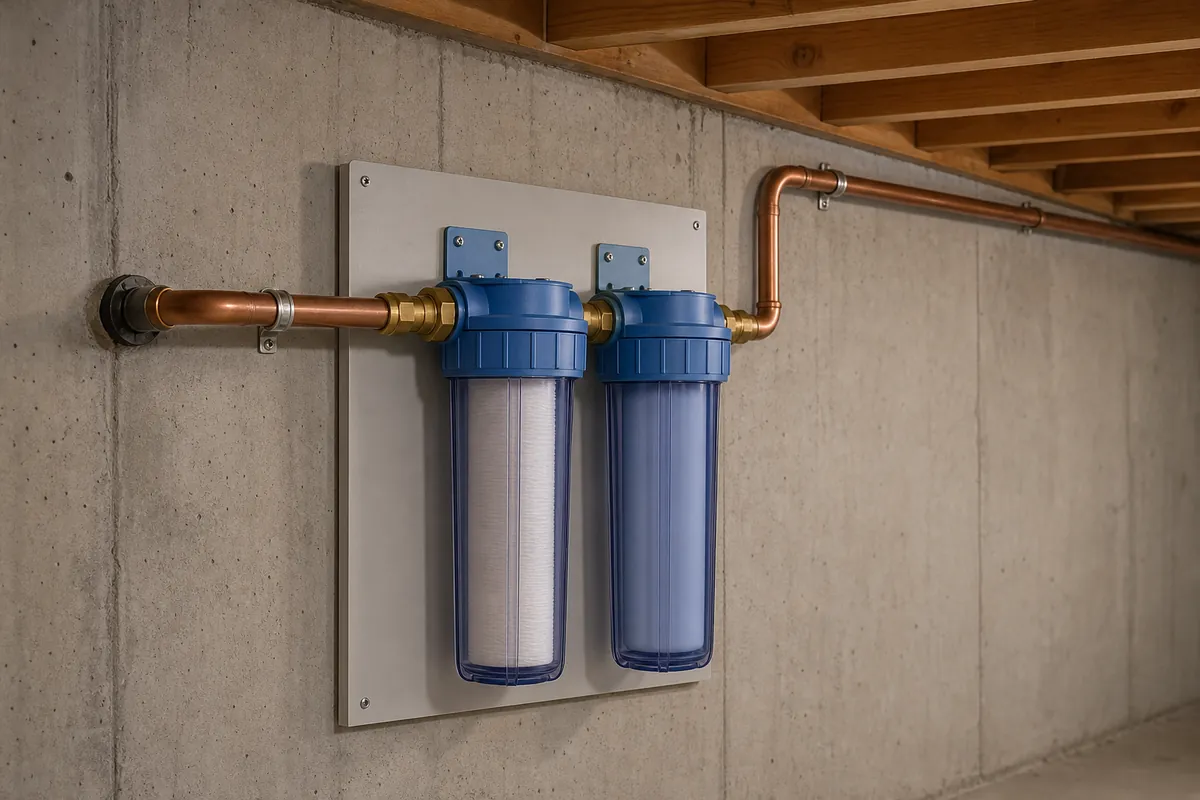
Know the problem you want to solve? Call now to connect with a local plumber for water filtration help in Greeley.
Call (970) 633-4799Certification
What to look for on the label
EPA does not endorse particular units. It does describe how to read a claim.
- Who certified itUnits are certified by ANSI-accredited organizations to ANSI/NSF standards.
- Health or aestheticThe standards come in two sets, one for health concerns and one for aesthetic concerns.
- What it removesUnits differ in what they remove, so match the label to your problem.
- No certificationIf a unit is not certified, contact the manufacturer directly and ask for proof of its claims.
Install and upkeep
What the install needs, and what it asks of you
Carbon filters are designed to filter a certain amount of water, and after that they clog and stop working. Replace them on the manufacturer's schedule. This page gives no interval, because it depends on the unit.
A unit at the water entry sits on the line that feeds the water heater, so a water heater replacement is a moment to plan where it goes.
Checklist for the site
- Where the filter will go: at one tap, or on the line where it enters the house
- Shutoff valves and a bypass, so the unit can be isolated for service
- Room to reach the cartridge or housing when it needs changing
- The manufacturer's instructions for the unit, kept where you can find them
- What the label says the unit is certified to do
Hardness or taste?
A filter and a softener are different jobs
A softener treats hardness. A filter treats the problem it is certified for. If the trouble is scale or buildup, start with a measured hardness number. If it is a taste or a smell, start with the city's tips above.
Water softener installation covers softening, and Hard water in Greeley explains how to find your number.
FAQ
Water filtration: common questions
Do I need a whole-house water filter?
The City of Greeley says its drinking water meets all state and federal drinking water standards, so a filter is a choice about taste or about a specific concern. EPA advises asking your supplier for its annual water quality report before you buy.
Why does my water taste earthy in summer?
The city says taste and odor issues are more common in hot, dry summers, when algae growth increases in lakes and reservoirs. It suggests chilling the water, using a carbon filter, or adding lemon, cucumber or mint.
Will a filter remove lead?
The city says using a filter certified by an ANSI-accredited certifier to reduce lead is effective in reducing lead exposures. The certification is on the label, and the filter's instructions should be followed. For service-line questions, the city's Lead Protection program is the place to ask.
What is the difference between a filter and a softener?
A softener treats hardness. A filter treats the problem it is certified for. Water softener installation
Whole-house or under-sink?
It depends on the problem. For most contaminants, a point-of-use device is effective for the water that is consumed, and a point-of-entry device treats the water entering the house.
How often do filters need changing?
On the manufacturer's schedule. Carbon filters are designed to filter a certain amount of water and then clog. This page gives no interval.
What does NSF/ANSI certification mean?
Units are certified by ANSI-accredited organizations to ANSI/NSF standards, in one set for health concerns and one for aesthetic concerns. If a unit is not certified, EPA says to contact the manufacturer and ask for proof of its claims.
What does a plumber check before installing a filter?
A plumber looks at where the water enters the house or where the tap sits, the room for the housing, the drain or shutoff access, and the problem the filter is meant to solve, then explains what the install involves.
Call about water filtration
Say what you want to solve, such as a taste, a smell or a concern, and which tap or taps it affects.
Reviewed October 2026