Plumbing emergency · Greeley, CO

Emergency plumber in Greeley, CO: what to do first and who to call

For fire, injury or a gas smell, call 911 first. Local plumbers in Greeley • Request an upfront written estimate • No obligation to hire.

Water you cannot stop, sewage coming up a drain, a pipe that has split: what you do in the first few minutes of a plumbing emergency in Greeley, CO limits the damage. Pick what is happening, follow the steps, then call now to connect with a local plumber for emergency plumbing help in Greeley.

Triage

Do you need an emergency plumber in Greeley? Start with this test

Some problems cannot wait for a convenient appointment, and many can be contained and scheduled. The test is whether you can stop the damage or the danger yourself.

Treat it as an emergency

  • A burst or split pipe, or any water you cannot shut off
  • Sewage backing up into tubs, showers or floor drains
  • Water reaching electrical outlets, appliances or the panel
  • A sump pump that has failed while water is rising
  • A water heater tank spilling water you cannot stop
  • A frozen pipe that has cracked and is leaking
  • A gas smell (leave first; see below)

Urgent, but you can contain it

  • A leaking pipe or fixture you have stopped at its own shutoff valve
  • A water heater with no hot water and no leak
  • One clogged toilet or sink while another is still usable
  • A slow drain, a dripping faucet or a running toilet
  • Low water pressure at one fixture

Contained does not mean fixed. A leak with its valve closed still needs repair before the water goes back on, which for a main line means the whole house is without water until it is done.

First minutes

What to do first, by situation

These are safe first steps, not repairs. They buy time until a plumber can deal with the cause.

Gas smell

A rotten-egg odor near a gas appliance or line.

  1. Leave now

    Get everyone, pets included, out of the building. Do not stop for belongings.

  2. Avoid anything that could spark

    No light switches, appliances, doorbell or flames, and do not start a vehicle in an attached garage.

  3. Call 911, then your gas utility

    Call from a safe distance. The gas utility's number is on your gas bill.

  4. Stay out until told it is safe

    Wait for responders or the gas utility. Do not look for the leak or fix it; repairs come afterward.

Water you cannot stop

A burst or split pipe, or a fixture or supply line that will not shut off.

  1. Shut off the main water supply

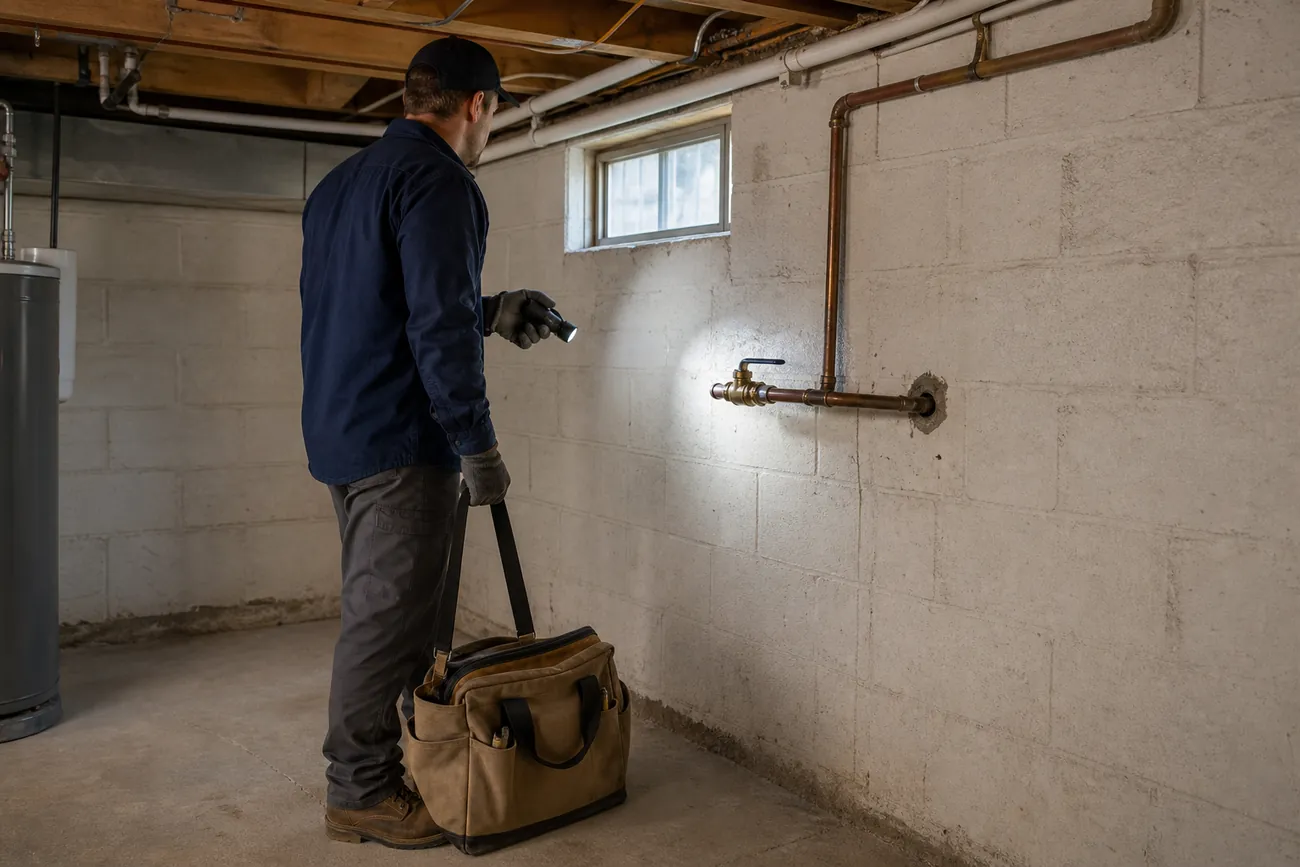
    Usually where the water line enters the house: a utility room, basement, crawl space or the wall near the water heater.

  2. Drain what is left

    Open the lowest cold-water faucet so the water left in the pipes drains there, not out of the break.

  3. Keep clear of electricity

    If water is reaching outlets, appliances or the panel, do not wade in. Switch power off at the panel only if you can reach it without stepping through water. If in doubt, call 911 or your electric utility.

  4. Limit the damage and take photos

    Move valuables out of the water's path. Photograph the damage before cleanup, for your insurance.

  5. If the water will not stop

    Tell the plumber when you call. Do not force the street-side valve or the meter; whether you may operate them is a question for the city. The city says your section of line may include the curb stop and the meter.

OPEN CLOSED CLOCKWISE
A lever in line with the pipe is open; across the pipe is closed. A wheel closes clockwise.

Sewage backing up

Sewage or gurgling in tubs, showers, floor drains or toilets, usually the lowest drains in the house.

  1. Stop sending water down the drains

    No flushing, sinks, showers, dishwasher or washing machine until the line is cleared.

  2. Keep people and pets away

    Stay out of the affected area and avoid touching sewage. If you must go in, wear gloves and waterproof boots, and wash well after.

  3. Skip the chemical drain opener

    They rarely clear a sewer line and leave caustic liquid in the sewage a plumber then has to work around.

  4. Work out whose line it is

    The answer decides who to call; see the diagram.

  5. Photograph before cleanup

    Take photos of affected areas and damaged items first.

Is anyone else affected?

Neighbors have the same trouble, or sewage is in the street

The city main may be involved. The City of Greeley runs a wastewater emergency line that it describes as open every day, around the clock. Report the problem to the municipal wastewater utility rather than waiting to see whether it clears.

Only your home

More likely your own service line, which the city says is the resident's responsibility. A plumber is the call.

Leaking water heater

Water around the base of the tank or dripping from its fittings.

COLD IN HOT OUT 1 2 3
  1. Close the cold-water supply to the tank

    The valve is on the pipe feeding the top of the heater. Closing it stops new water entering the tank.

  2. Keep clear of the power and fuel controls

    Water around an electric heater is a shock hazard, and a gas heater's controls and vent are not a homeowner adjustment. Stay out of standing water near the heater and tell the plumber it is leaking. If you smell gas, leave first and call 911 from outside.

  3. Note where the water is coming from

    Top fittings, relief-valve pipe or the bottom of the tank. Tell the plumber; it helps decide repair or replacement.

Frozen pipe

No water at a faucet in freezing weather, or frost on an exposed pipe.

  1. Open the faucet, know where the main is

    Open the affected faucet so melting ice has somewhere to go, and find the main shutoff in case the pipe has split.

  2. Do not thaw it yourself

    A frozen pipe can already be split behind the ice, and the split starts to leak as it thaws. Never use a torch or any open flame. Call for an immediate evaluation.

  3. If the pipe has split

    Treat it as water you cannot stop and follow those steps. More on frozen pipes

Who to call

The city, a utility or a plumber

The right call depends on where the problem is. A plumber handles what is inside your home and on your own pipes.

Gas smell, fire, injury, or sparking electrical equipment

911

For a gas smell, call from outside, then call your gas utility; its number is on your gas bill.

Sewage in the street, or the same backup along your block

The city utility

Report it to the municipal wastewater utility, which the City of Greeley runs as an emergency service. A city department, not a plumbing contractor.

Trouble inside your home or on your own pipes

A plumber

Call now to connect with a local plumber for emergency plumbing help in Greeley.

Call (970) 633-4799

Not sure whose problem it is? Describe what you see when you call. Where the water or sewage appears, and whether neighbors are affected, helps sort out whether it is yours or the city's.

Have this ready for the call

  • Your address and a number to call you back
  • What you see: where the water or sewage is, how much, and for how long
  • Whether you have shut the water off, and whether that stopped it
  • Whether neighbors have the same problem
  • For a water heater: gas or electric, and roughly how old it is
  • Photos of the damage, taken before cleanup

What not to do

  • Use a torch or open flame to thaw a pipe
  • Pour chemical drain openers into a sewage backup
  • Keep running water in a house with a backed-up drain
  • Work on a gas line or gas appliance yourself
  • Wade through standing water near electrical equipment
  • Throw out damaged materials before photographing them

After you call

What happens after you call

A plumber's first job is to stop the damage: closing off water, clearing a line enough to end a backup, or making an area safe. The repair that follows depends on the cause, and a quick fix is sometimes followed by a second visit for the permanent one.

Exact arrival time and pricing depend on the problem, how easy it is to reach and what the plumber finds on site. What to check before you hire a plumber in Greeley.

Before work starts, ask the plumber:

?What is your estimated arrival window?

?How does pricing work, including after hours?

?Is your licensing current?

?Does the job need a permit?

Go deeper

Emergency problems with their own pages

This page covers the first minutes. These pages go further into the cause, the repair and what to expect.

FAQ

Emergency plumber in Greeley: common questions

Should I call 911 or a plumber if I smell gas?

Call 911, after you have left the building. Then call your gas utility. A plumber is for repairs once the area has been made safe.

Whose responsibility is a sewage backup in Greeley, the city's or mine?

It depends on where the blockage is. The city maintains the public sewer mains, and residents are responsible for their own service line.

If the same thing is happening along your block, report it to the municipal wastewater utility. If it is only in your home, the cause is more likely on your own line, and a plumber is the call.

Can I wait until morning for a burst pipe or a leak?

If you have shut off the water and the leak has stopped, many leaks can be scheduled. The water then stays off until the repair is made. If you cannot stop the water, do not wait.

Is a clogged toilet an emergency?

Usually not, if the water has stopped rising and you have another toilet. It becomes urgent if it overflows with sewage or if several drains back up at once, which points to a problem in the main line. Clogged toilet help

Will my homeowners insurance cover emergency plumbing damage?

Policies differ, and coverage often depends on the cause and on whether the damage was sudden. Your own policy and insurer decide what is covered. Photograph the damage before cleanup, keep damaged items until your insurer says otherwise, and contact the insurer early.

Will I get a price over the phone?

It depends on the problem. Some plumbers give a range after hearing the details, and many want to see the problem first. Ask how they charge, including for after-hours work, before you agree to a visit.

What should I do while waiting for a plumber?

Shut off the main water valve if water is escaping, stop using water if sewage is backing up, and keep clear of standing water near outlets, appliances or the electrical panel. Photograph the damage before cleanup. If you smell gas, leave first and call 911 from outside.

Call about your plumbing problem

Describe what you are seeing and what you have already done.

Reviewed October 2026

Call (970) 633-4799