Drain cleaning · Greeley, CO
Drain cleaning in Greeley, CO: clear a slow drain, and know when it is bigger
A slow or clogged sink, tub or shower drain in a Greeley, CO home is often a clog in that fixture's own pipe or its branch line, and drain cleaning can clear it. When several drains are slow at once, the cause may be the main line. Call now to connect with a local plumber for drain cleaning in Greeley.
Local plumbers in Greeley • Request an upfront written estimate • No obligation to hire.
- ASink trap
- BTub trap
- CBranch line
- DWhere the main line starts
Start here
Drain cleaning in Greeley: which spot on the drawing matches what you see?
Note which drains are slow and which are not. How many are affected is a good first clue to where the clog sits.
- A
One sink is slow or stopped
The clog is likely in that sink's own drain or trap. A plumber reaches it through the trap or the fixture drain.
- B
One tub or shower is slow
Hair and soap collect at the drain and in the trap under it. Water standing around your feet is the sign.
- C
Several fixtures in one area are slow
Fixtures on a shared branch, such as a bathroom's sink, tub and toilet, can slow down together when the branch is partly blocked. A plumber may clear it through a fixture drain or a cleanout.
- D
Many fixtures, or the lowest drain fills first
That points past the branches, to the main line, which is a different job. Main sewer line cleaning covers it. To tell the difference, see slow drain or main line clog.
What blocks it
What clogs each kind of drain
Different fixtures clog for different reasons, and the cause points to what to change afterward.
Bathroom sink
Hair, soap scum and toothpaste collect in the drain and the trap beneath it. A pop-up stopper can hold a clump of hair you can pull out.
Kitchen sink
Grease and food residue cool and stick inside the pipe. The City of Greeley asks residents to keep fats, oils and grease out of drains. A disposal that will not turn is a separate problem: garbage disposal repair.
Tub and shower
Hair and soap scum gather at the strainer and in the trap below it. A slow tub can also be the first sign of a bigger problem, so note whether other drains are slow.
Floor drain and laundry
Lint, grit and detergent residue from a washer's discharge. A basement floor drain is often the lowest opening in the house, so it can be where a main-line problem shows first.
A toilet has its own steps. Clogged toilet
How a drain gets cleared
From hand tools to hydro jetting
Methods run from simple to heavier. Which one fits depends on what is blocking the drain and on the condition of the pipe.
Fixture-level clearing
The plumber works at the fixture. Opening the trap and clearing it reaches the stretch where hair, soap and grease first collect.
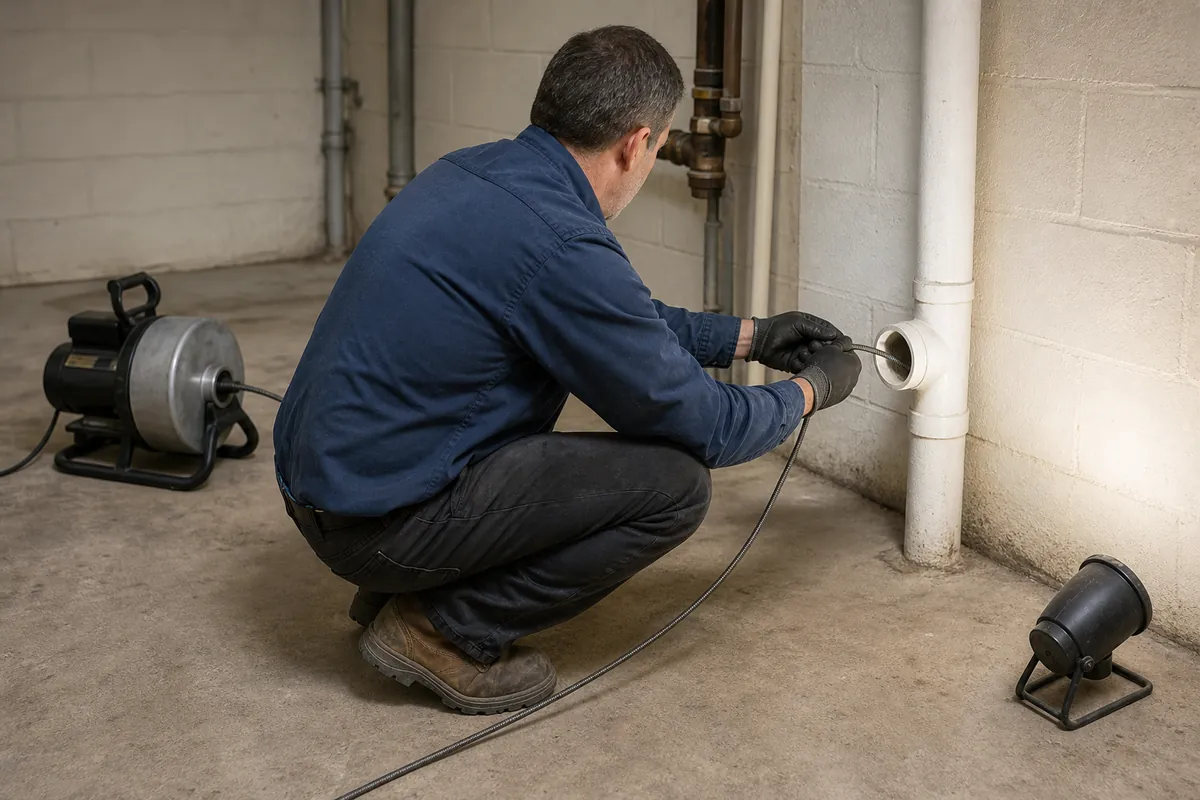
Auger or drain machine
An auger is a flexible cable turned to break up a clog or hook it out, and a drain machine is a motor-driven version with a choice of cutting heads. Either carries a head past the trap and along the branch, and the way the cable behaves tells the plumber whether the obstruction is soft, hard or a root mass.
Hydro jetting
Hydro jetting uses pressurized water to scour the pipe wall rather than punch through a clog. Whether it suits a pipe depends on the pipe's condition, which a plumber checks first. Main sewer line cleaning compares it with a cable on the main line.
If the same drain keeps clogging, a plumber may suggest a camera. Cleaning clears what is there; it does not show why the clog came back.
- 1Fixture-level clearing. It works at the fixture and its trap.
- 2Auger or drain machine. A cable carries a head along the branch.
- 3Hydro jetting. Pressurized water scours the pipe wall.
Drain still slow after the simple tries? Call now to connect with a local plumber for drain cleaning in Greeley.
Call (970) 633-4799When it is bigger
One drain, or something past it?
Cleaning one drain is a small job. These signs say whether that is all it is.
Cleaning the drain is the job
- One fixture is slow or stopped, and the others drain normally
- It came on over days or weeks, not all at once
- It stays clear after it is cleaned
It may be past the drain
- Several fixtures are slow or stopped at the same time
- The lowest drain in the house, such as a basement floor drain, fills or gurgles first
- One fixture gurgles or rises when another one runs
- The same drain clogs again and again, even after cleaning
- Anything is coming up that should be going down
Sewage coming up? Sewer backup
One drain, or the main line? This page covers a fixture and its branch. When the signs above apply, the blockage is further down, and main sewer line cleaning covers how that line is cleared.
Not just a clog
When cleaning alone is not the answer
Cleaning clears what is inside a pipe. It does not repair the pipe, and it does not fix the parts around it.
The pipe itself
- A cracked, offset or sagging section of pipe can catch debris again after each cleaning.
- Tree roots can grow into an underground joint, and the clog returns until the joint is dealt with.
- A pipe that has collapsed or separated cannot be opened by cleaning.
A plumber can look inside with a camera to see what is wrong. That is a separate step from cleaning.
The vent or the fixture
- A blocked vent can make drains slow and gurgle even when the pipe is open.
- A toilet that clogs on its own may have a weak flush or a worn part. Clogged toilet
- A disposal that hums or will not turn is a disposal problem. Garbage disposal repair and replacement
Before you call
Fixture blockage vs. main lateral failure: recognizing structural restrictions
Drain cleaning removes a blockage. Whether removing it is enough depends on whether the blockage is a one-time event at a fixture or a symptom of a line that is narrowing, sagging or breaking down.
A fixture-level blockage looks like this
- One fixture is slow while every other drain in the house runs normally
- Hair, soap scum or grease has built up in the trap or the first stretch of the branch
- The slowing came on gradually and shows only at that fixture
- Nothing gurgles elsewhere when the water runs
A structural restriction looks like this
- Several fixtures slow together, or the lowest drain in the house fills first
- The same drain clogs again within days or weeks of being cleared
- A toilet or floor drain gurgles when another fixture runs
- Sewer odor near a floor drain or cleanout. Chemical openers make this worse: they rarely clear a sewer line, and if they fail they leave a caustic liquid in the pipe
Roots, bellies and scale: how a line narrows
In older clay (terracotta) sewer pipe, the joints between sections are the weak point. Roots find the moisture that seeps from a joint, enter it as fine hairs and thicken into a mat that traps paper and solids, so the pipe clogs again soon after it is cleared. In plastic pipe the failure is usually a belly: a stretch where the ground under the pipe settled and left a low spot that holds a pool of water, so solids drop out of the flow and pile up there. Grease and mineral scale narrow a pipe from the wall inward, a little at a time, until a normal load of paper cannot get through.
How a plumber tells which one it is
A drain machine clears the blockage, and the way the cable behaves says a good deal: a cable that stops at the same distance each time points to a fixed obstruction such as a joint, while one that keeps catching and clearing points to roots. For a drain that returns, a color fiber-optic camera passed through the cleanout shows the pipe wall, the joints and any low spot, and a locator at the surface marks how deep the problem is. Clearing a line that has a belly or an offset joint without finding it means the next blockage is a matter of time.
What delay costs is rarely the drain. A partly blocked lateral backs up at the lowest opening in the house, often a basement floor drain or shower, and sewage that reaches finished flooring, drywall or a subfloor is a contamination and mold problem as well as a plumbing one. If several fixtures are involved, call for an immediate evaluation.
Keeping it clear
How to keep drains from clogging again
Clogs build up over time from the same few things, and a few habits keep them out.
- Keep fats, oils and grease out of every drain. The City of Greeley asks residents to do so. Wipe greasy pans with a paper towel and put it in the trash.
- Keep "flushable" wipes out of drains and toilets, and flush only toilet paper, as the city asks.
- Fit hair catchers in tubs and showers, and empty them.
- Use a strainer in the kitchen sink to keep food scraps out.
- Do not use chemical openers as routine maintenance.
There is no universal cleaning schedule. A drain that clogs repeatedly is a reason to find out why, not to clean it on a timer.
FAQ
Drain cleaning: common questions
Why does the same drain keep clogging?
A clog that keeps coming back has a cause. It may be a build-up that cleaning only partly removed, a habit such as pouring grease down the drain, or a problem in the pipe such as a rough joint, a sag or roots. If the same drain clogs again within weeks of being cleaned, ask the plumber whether a camera inspection makes sense.
Is a chemical drain cleaner OK?
It is best not to. Openers are made for a single fixture's clog, they rarely clear a sewer line, and if they fail they leave a caustic liquid in the pipe for whoever has to work on it next.
When is it the main line instead?
When several fixtures are affected at once, when the lowest drain in the house fills first, or when one fixture running makes another gurgle or rise. Slow drain or main line clog? How to tell walks through the test, and main sewer line cleaning covers the main line itself. If sewage is coming up, see sewer backup.
When is a repeat clog a sign of a damaged line?
When it returns within weeks, when more than one fixture is involved, or when a drain machine reaches the same stopping point each time. Those patterns point to roots at a joint, a belly or an offset section rather than to something that went down the drain. A camera inspection through the cleanout shows which, and it is worth requesting before paying to clear the same line again. Sewer camera inspection
How do I keep drains from clogging again?
Keep fats, oils and grease out of drains and flush only toilet paper; the City of Greeley asks the same. Use hair catchers in tubs and showers and a strainer in the kitchen sink. If a drain keeps clogging anyway, find the cause rather than clearing it on a schedule.
Is hydro jetting safe for my pipes?
It depends on the condition of the pipe, which a plumber checks before choosing it. Jetting uses pressurized water to scour the pipe wall, and an old or damaged pipe may not suit it, so the pipe's age and condition decide whether it suits yours. Jetting is compared with a cable on the main line under main sewer line cleaning.
How soon can a plumber clear a clogged drain?
Timing depends on the problem and on the plumber's schedule when you call. A single slow drain can usually be scheduled; sewage coming up or several drains backing up at once is more urgent, so say so on the call.
Call about the clogged drain
Say which fixtures are slow and whether anything is coming up.
Reviewed October 2026