Sewer backup · Greeley, CO
Sewer backup in Greeley, CO: stop the water, then find out whose line it is
For fire, injury or a gas smell, call 911 first. Local plumbers in Greeley • Request an upfront written estimate • No obligation to hire.
Sewage or gurgling in the lowest drains of a Greeley, CO home usually means the line that carries wastewater out is blocked or damaged. Stop sending water down the drains, keep clear of the affected area, then call now to connect with a local plumber for sewer backup help in Greeley.
Whose line is it?
Neighbors have the same trouble, or sewage is in the street
Notify the cityReport it to the municipal wastewater utility, which the City of Greeley runs as an emergency service. A city department, not a plumbing contractor.
Only your home
More likely your own service line, which the city says is the resident's responsibility. A plumber is the call.
Not sure
Say which drains are affected, where the sewage is and whether neighbors have the same problem. That helps sort it out.
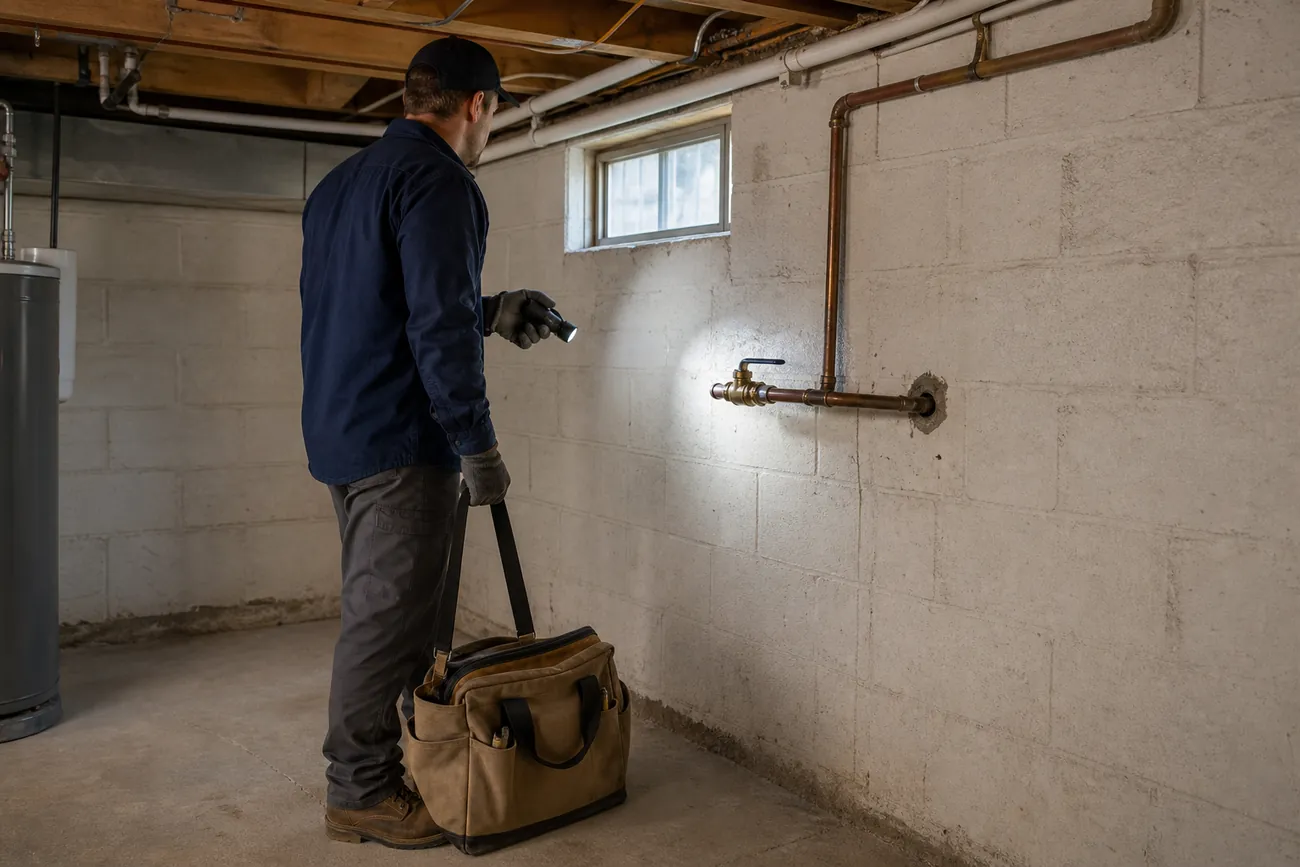
Sewer backup in Greeley: what to do and what to skip while sewage is backing up
Do now
- Stop using water: no flushing, sinks, showers, dishwasher or washer
- Keep people and pets out of the affected area
- Wear gloves and waterproof boots if you must go in
- Photograph the damage before cleanup
Skip these
- Chemical drain openers
- Running water to push it through
- Opening the cleanout cap yourself
- Throwing out damaged items before photos
Openers rarely clear a sewer line, and they leave caustic liquid in the sewage the plumber then has to work around.
Why it shows up where it does
Why the lowest drain shows it first
Every drain in the house empties into one line out to the street. When that line is blocked, wastewater has nowhere to go and comes up at the lowest opening.
- 1
Fixtures upstairs
Usually fine at first: they sit higher than the blockage, so they only slow down or gurgle.
- 2
The lowest drain
A basement floor drain, tub or shower is where sewage tends to appear first.
- 3
The main drain and its cleanout
Inside the house, the line that every branch joins. The cleanout is a capped opening a plumber uses to reach it.
- 4
Your service line, out to the city main
Runs under the yard to the public sewer. The city says residents are responsible for their own service line.
Telling them apart
Main line, or just one drain?
A single slow drain is a smaller problem than a blocked main. Watching which fixtures are affected usually answers it. Slow drain or main sewer line clog? How to tell
Points to the main line
- Several fixtures slow or backing up at once
- Sewage or water in the lowest tub, shower or floor drain
- A toilet that bubbles or gurgles when the washer drains
- Flushing sends water up another drain
Points to one fixture
- Only one sink, tub or toilet is affected
- Everything else drains normally
- It clears with a plunger, then slows again
A single toilet or sink is a smaller job. Clogged toilet
Greeley specifics
Who handles which part of the sewer line
This is how the City of Greeley describes it. It decides whether the first call is the city or a plumber.
Sewer line out of the house
The public sewer mains under the street.
Your own service line. The city says residents are responsible for their own service line.
Sewage in the street or a whole block backing up is a call to the city. A blockage in your own line is yours to have cleared.
The city does not say exactly where a given lot's line ends, so ask the city when it matters. Report a street-wide problem to the municipal wastewater utility, which runs the emergency service. Who repairs sewer and water lines in Greeley
What a plumber does
How a sewer backup is cleared and fixed
Clearing the line ends the backup. Whether anything more is needed depends on why it blocked.
- 01
Find the blockage
A plumber may use the cleanout to reach the line, and a camera can show where it is blocked and what is causing it. Sewer camera inspection
- 02
Clear the line
A cable or high-pressure water is used to open the line so wastewater flows again. Main sewer line cleaning
- 03
Repair it if it is damaged
Roots, a crack, a sagging section or a collapse can cause the same blockage again and again. If the camera shows damage, clearing is a stopgap and the fix is a repair. Sewer line repair
Sewage or several drains backing up? Call now to connect with a local plumber for sewer backup help in Greeley.
Call (970) 633-4799Afterward
Cleanup, health and insurance
Treat sewage as a health hazard: avoid touching it, wash well afterward, and keep children and pets away. Anything it soaked into, such as carpet or drywall, may need professional cleanup, which is separate from the plumbing repair.
Sewer backup coverage is often not part of a standard homeowners policy and may be an add-on. Your own policy and insurer decide what is covered. Photograph everything before cleanup and contact your insurer early.
Have this ready for the call
- Which drains are backing up, and which are still working
- Where the sewage is, and roughly how much
- Whether neighbors have the same problem
- When it started, and whether it has happened before
- Photos taken before cleanup
Keep it from happening again
Prevention, and the pages that go deeper
The City of Greeley asks residents to flush only toilet paper and to keep fats, oils, grease and "flushable" wipes out of the drains.
- ServiceMain sewer line cleaningHow a blocked main line is opened and what to expect.
- ServiceSewer camera inspectionSeeing inside the line to find the cause of repeat backups.
- ServiceSewer line repairWhen the line itself is damaged and clearing is not enough.
- GuideWho repairs sewer and water linesThe city's side, your side, and what to do when you cannot tell.
FAQ
Sewer backup in Greeley: common questions
Who is responsible for a sewer backup in Greeley, the city or me?
It depends on where the blockage is. The city maintains the public sewer mains, and residents are responsible for their own service line.
If the same thing is happening along your block, report it to the municipal wastewater utility. If it is only in your home, the cause is more likely on your own line, and a plumber is the call.
Can I keep using water while I wait?
No. Water you run goes into the same blocked line and can make the backup worse. Hold off on flushing, sinks, showers, the dishwasher and the washer until the line is cleared.
Will a chemical drain cleaner fix it?
Rarely. Drain openers are made for a clog in a single fixture, not a blocked sewer line, and they leave caustic liquid in the sewage that the plumber then has to work around.
Why is sewage coming up in the basement and not upstairs?
Basement drains are the lowest openings on the line, so a blockage pushes wastewater out there first. Upstairs fixtures may only slow down or gurgle at first.
Is a sewer backup covered by homeowners insurance?
Often it is not part of a standard policy and is an optional add-on, but policies differ. Ask your insurer, and photograph the damage before any cleanup.
Is it an emergency?
Sewage coming up into the house is, because it is a health hazard and the damage spreads. A single slow drain is not. What counts as a plumbing emergency
What should I do while waiting for a plumber?
Stop using water: no flushing, sinks, showers, dishwasher or washer. Keep people and pets out of the affected area, and wear gloves and waterproof boots if you must go in. Skip chemical drain openers and do not open the cleanout cap yourself. Photograph the damage before cleanup.
Call about the sewer backup
Describe which drains are affected and whether neighbors have the same trouble.
Reviewed October 2026