Whole-house repiping · Greeley, CO
Whole-house repiping in Greeley, CO: when new pipes beat another repair
Repeat leaks, pinholes, rusty water and weak flow in a Greeley, CO house can mean the pipes themselves are wearing out. Whole-house repiping replaces the water supply pipes inside the house, in part or all the way through. This page covers the signs, the pipe materials, PEX and copper, what the work disturbs, and the permit question. Call now to connect with a local plumber for repiping help in Greeley.
Local plumbers in Greeley • Straightforward service • No obligation to hire.
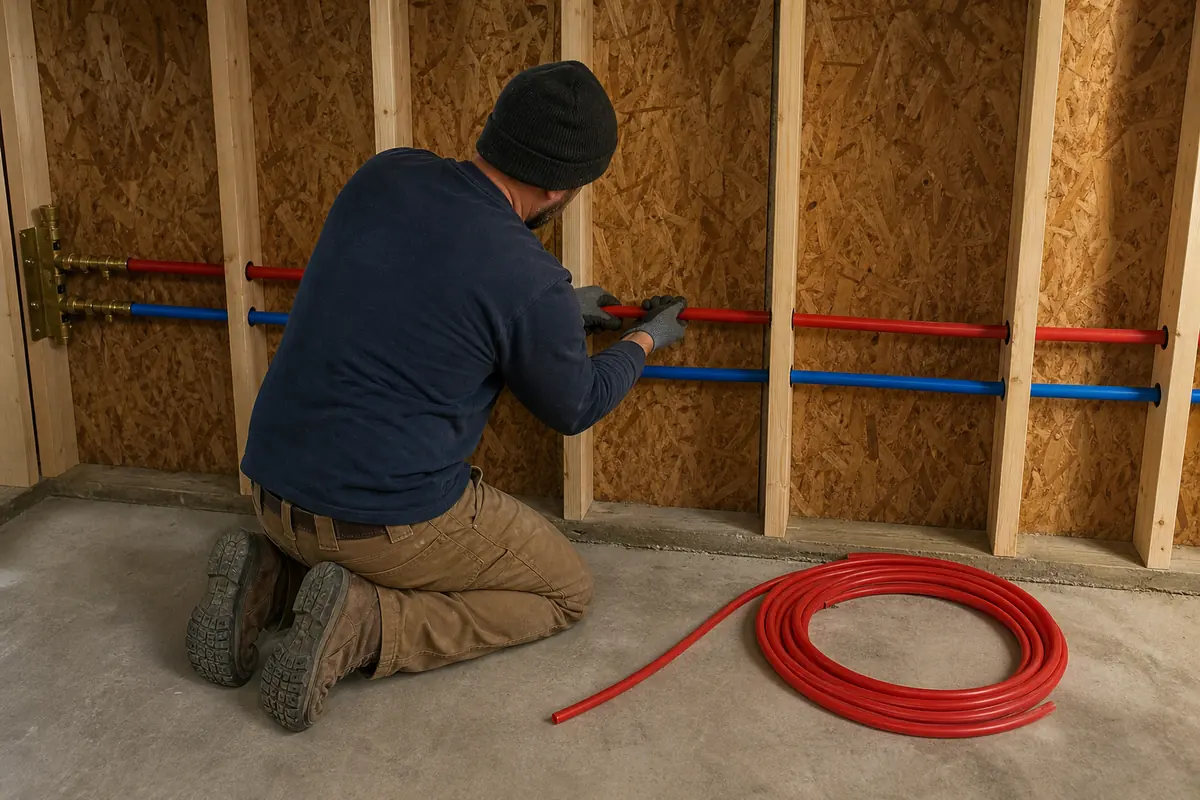
Whole-house repipingSigns, PEX or copper, what the work disturbs
When it is time
Signs it is time to ask about whole-house repiping
One leak is a repair. A pattern of problems is a question about the pipes.
Leaks that keep coming back
A second or third leak in a different spot, soon after the last repair.
Pinhole leaks
Tiny leaks, often in copper, that spray a fine mist or leave a small wet stain.
Rusty or brown water
Discolored water from several taps can point to corroding pipe. It can have other causes, so a plumber should look.
Weak flow at many fixtures
Old steel pipe can narrow from the inside as it corrodes. Water pressure problems sorts this from other causes.
Corrosion you can see
Green crust, flaking or stains on exposed pipe and joints.
A pipe material to ask about
Some older materials are known repipe triggers. The next section covers how to tell what you have.
One leak, or the whole system? A single leak in good pipe is usually located and repaired. Leak detection covers finding it. Repiping is the question when leaks, corrosion or a problem material point to the whole run.
What you have
Telling the pipe material apart
Look at pipe you can see, such as near the water heater, under sinks or where the water enters the house. Pipes behind walls can differ, and a plumber confirms the material.
-
Galvanized steelGray, threaded
Dull gray steel with threaded joints. It corrodes from the inside, which can narrow the pipe and cut flow. A magnet sticks to it.
-
CopperReddish, soldered
Rigid pipe, reddish-brown when clean, with green or blue crust where it has corroded. Pinhole leaks are a reason people ask about repiping.
-
PEXFlexible plastic
Flexible plastic tubing, often red, blue or white, joined with crimped or clamped fittings.
-
PolybutyleneOlder flexible gray
An older flexible plastic pipe, usually gray. Plumbers often raise it as a material to ask about. This page makes no claim that any home has it.
A house can have more than one material, for example a newer section joined to older pipe.
Leaks, rusty water or old pipe? Call now to connect with a local plumber for repiping help in Greeley.
Call (970) 633-4799The options
Part of the house, or all of it
A repipe does not have to cover every pipe. The condition of what stays decides.
Points to a partial repipe
- The trouble sits on one run, such as one bathroom or one branch
- The rest of the pipe looks sound
- The failed section can be reached
Points to the whole house
- Leaks in several places, or the same type of failure again and again
- Corrosion or discolored water at many fixtures
- A material that plumbers flag, throughout
A plumber judges this after looking at the pipe.
Materials
PEX or copper: the trade-offs
This page does not pick one. Both are used for supply piping, and the choice rests on the house and on preference.
PEX
- Flexible, so it can bend around corners and may need fewer openings in walls.
- Joined with fittings rather than solder.
- Needs the right fittings and supports, and code and manufacturer limits apply.
Copper
- Rigid metal pipe, used for a long time and familiar to most plumbers.
- Joined with soldered or fitted connections, which takes more work in tight spaces.
- Can still develop pinholes or corrode in some conditions.
Material cost, labor and access all differ between the two. Ask the plumber to explain the choice for your house.
What the work disturbs
What repiping means for the house
It varies with the house. These are the parts worth asking about.
- 01
Getting to the pipe
Some pipe can be reached from a basement, crawl space or attic. Pipe inside finished walls and ceilings may need openings, and where those go is part of the plan.
- 02
Water is off at times
The supply is shut while pipes are swapped. Ask when to expect it off and for how long, and plan for showers, cooking and laundry.
- 03
Patching and finishing
Drywall, paint and flooring that were opened need repair afterward. Ask whether that is part of the job or left to you.
Permit and inspection
Does repiping need a permit?
The City of Greeley says an owner or authorized agent must first get a permit from the building official to alter or repair a building, and to install or modify plumbing systems that its code regulates. The city's page does not say how that applies to a particular repipe, and this page cannot either.
Have the contractor confirm permit details with the City's building inspection division, a city department. Plumbing permits in Greeley
Cost factors
What affects the size of the job
Pricing depends on the house, the pipe material and the access found on site. These are the things that move it.
- The size of the house and the number of fixtures
- The pipe material chosen
- How easy the pipe is to reach, including a slab or finished walls
- Whether it is a partial or whole-house repipe
- Permit and inspection, and the patching afterward
Inside the house, or street to house? Repiping covers pipe inside the house. The line from the street is a different job: water service line replacement.
Tell the plumber
- What leaked, where, and how many times
- What the pipe looks like where you can see it
- Whether the water is ever rusty or discolored
- Any weak flow or pressure changes
- Parts of the house that would be hard to reach, such as a slab floor
FAQ
Whole-house repiping: common questions
When should I repipe instead of repairing a leak?
A single leak in otherwise sound pipe is usually a repair. Leaks that keep coming back, pinholes in several places, widespread corrosion, or a material plumbers flag all point toward replacing pipe. A plumber can judge after looking at the pipe. Leak detection
How can I tell galvanized, copper and PEX apart?
Galvanized is dull gray steel with threaded joints, and a magnet sticks to it. Copper is rigid and reddish-brown, with green or blue crust where it has corroded. PEX is flexible plastic, often red, blue or white. Pipe behind walls can differ from what you see, so a plumber confirms it.
Is polybutylene pipe a problem?
Plumbers often raise polybutylene, an older flexible gray plastic pipe, as a material to ask about. This page makes no claim about any home, and a plumber can tell you what you have and what to do about it.
Does a repipe need a permit?
The City of Greeley says an owner or authorized agent must first get a permit from the building official to alter or repair a building, and to install or modify plumbing systems that its code regulates. The city's page does not say how that applies to a particular repipe. Have the contractor confirm permit details with the City's building inspection division.
What affects the cost of repiping?
Pricing depends on the findings on site. House size, the number of fixtures, the material chosen, access to the pipe, a partial or whole-house scope, permit and inspection, and the patching afterward all move it.
How is the pipe evaluated on site?
A plumber identifies the pipe material, checks the leaks and the condition of the pipe at the meter, water heater and fixtures, and sees how the lines run and what must be opened, then explains whether a repair, a partial repipe or a whole-house repipe fits.
Call about repiping
Say what has leaked, what the pipe looks like, and which parts of the house would be hard to reach.
Reviewed October 2026